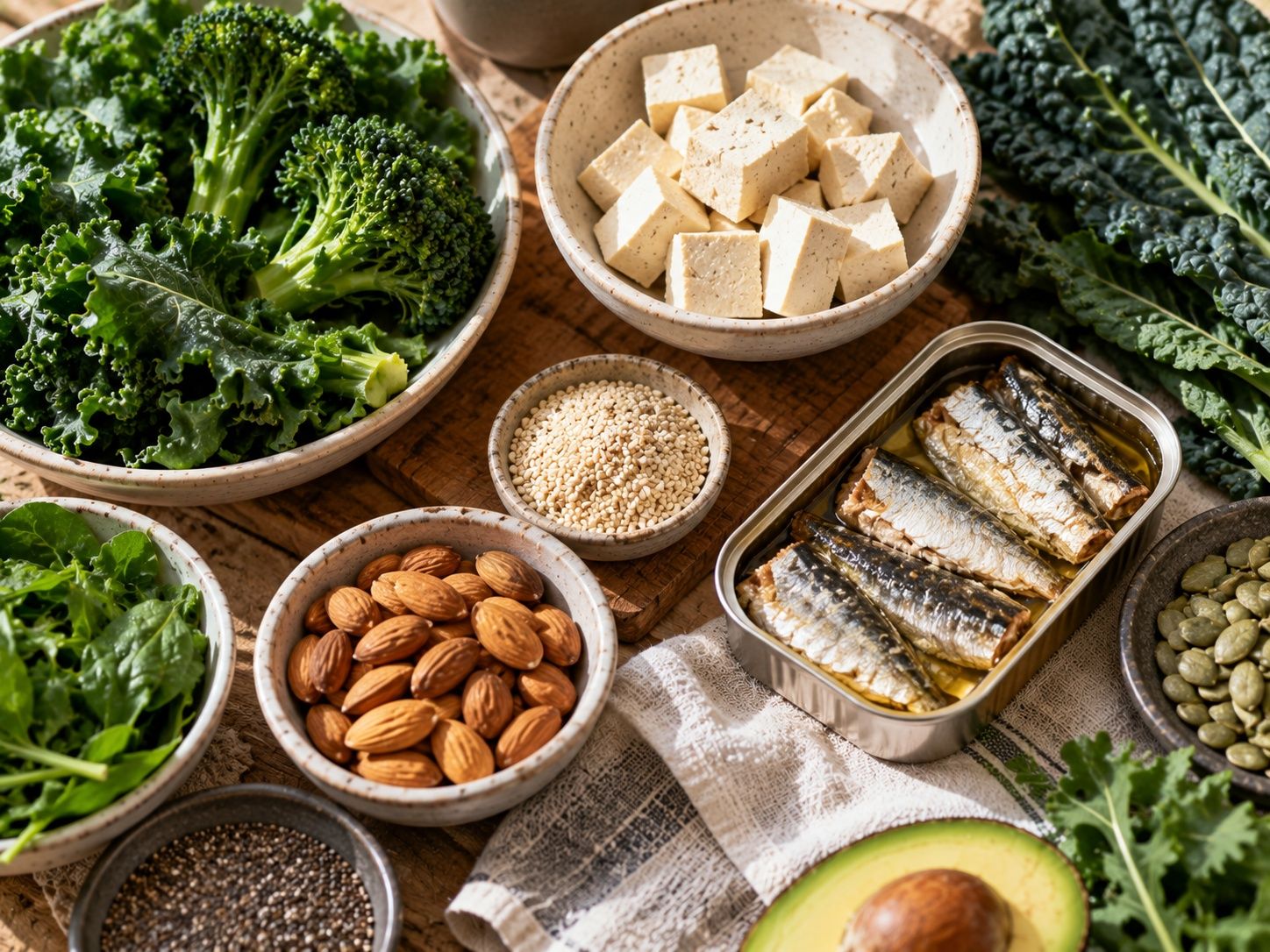
Dairy is a convenient calcium source, but it's far from the only one — and for anyone who avoids it, whether by preference, intolerance or diet, there are genuinely adequate alternatives once you know where to look.
Fortified plant milks
Most UK soya, oat and almond milks are fortified with calcium to match dairy milk, typically around 120mg per 100ml — but it's worth checking the label, as fortification levels vary by brand and some aren't fortified at all. Shaking the carton before pouring also helps, as fortified calcium can settle at the bottom over time.
Leafy greens — with one caveat
Kale, spring greens and bok choi are genuinely good calcium sources with high bioavailability. Spinach and chard, despite containing calcium, are less useful sources than they appear — they're high in oxalates, compounds that bind to calcium and significantly reduce how much your body can actually absorb.
Tinned fish with bones
Sardines and pilchards tinned with their soft, edible bones are one of the most concentrated calcium sources available, and come with the added benefit of omega-3 fatty acids.
Tofu (calcium-set)
Tofu set with calcium sulphate (check the ingredients list — not all tofu is made this way) is a substantial calcium source, alongside being a complete protein.
Tahini and sesame seeds
Sesame seeds and tahini paste are a genuinely useful, often-overlooked calcium source, easily added to dressings, hummus or stirred into porridge.
Almonds
A good source of calcium alongside healthy fats, though the quantity needed to make a meaningful contribution is higher than a small handful — worth thinking of as a contributor rather than a primary source.
Putting it together
UK adults need around 700mg of calcium a day. A day that includes fortified plant milk in your morning tea or porridge, calcium-set tofu or leafy greens at lunch, and tinned sardines or tahini-based dressing at dinner can realistically meet this without dairy — it just takes slightly more deliberate planning than defaulting to a glass of milk.