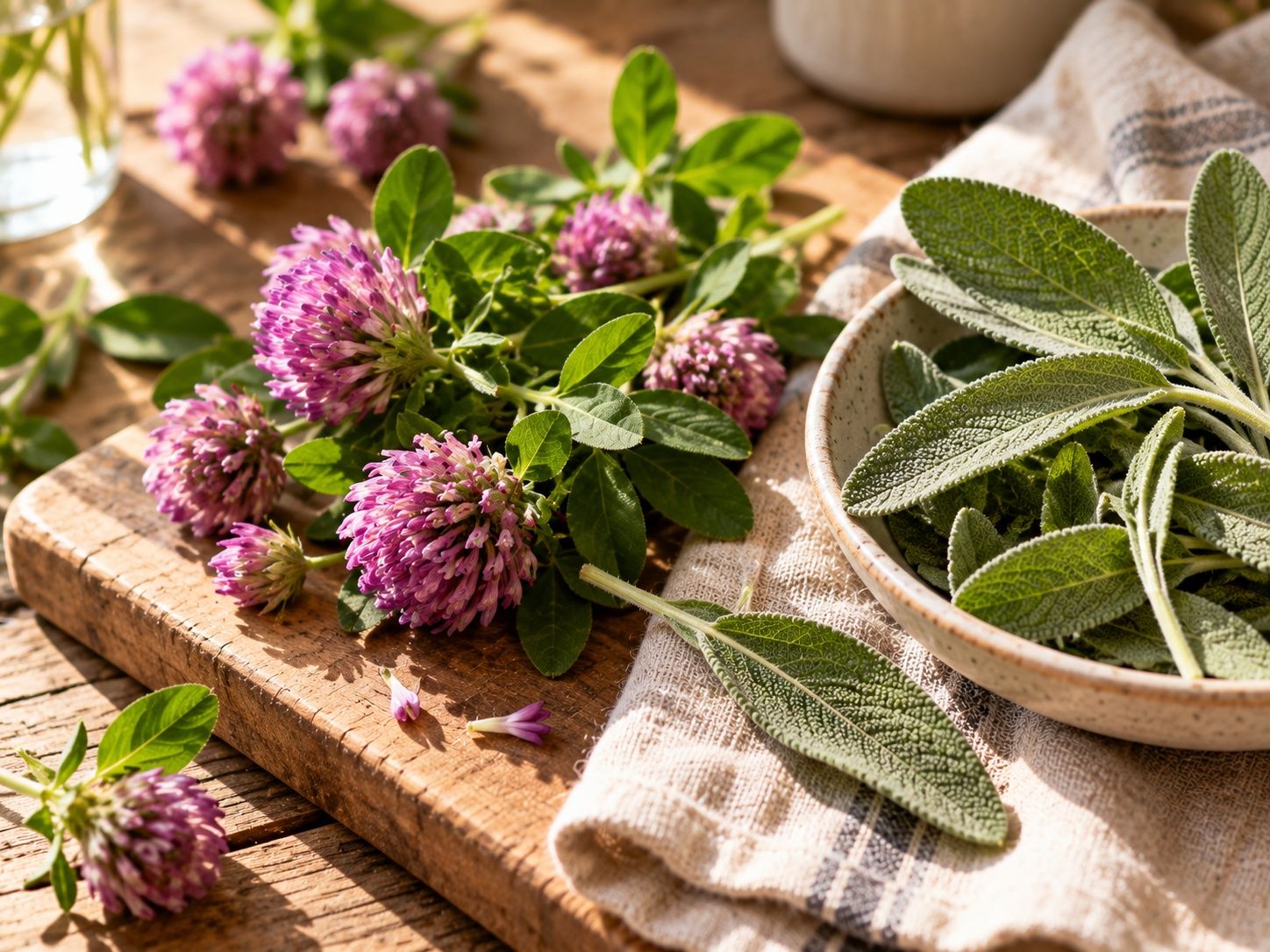
Hot flushes are one of the most researched menopause symptoms, and a handful of plant-based ingredients come up repeatedly. None are guaranteed to work for everyone, and evidence quality varies — but here's an honest look at what's most commonly used and why.
Red clover and soy isoflavones
Both are sources of isoflavones, phytoestrogens with a chemical structure similar enough to oestrogen to interact weakly with oestrogen receptors. Research findings on symptom relief are mixed — some trials show a modest reduction in hot flush frequency, others show little difference from placebo. What matters most when comparing products is the actual isoflavone dose, not just whether "red clover" appears on the label — doses in research trials are typically in the tens of milligrams, and vague labelling makes it impossible to know what you're actually getting.
Sage
Sage has a longer history of traditional use specifically for sweating and hot flushes, and some smaller trials support a benefit, often used alongside a phytoestrogen source rather than alone.
Black cohosh
One of the most studied menopause herbs, with a genuinely mixed evidence base — some trials show benefit for hot flushes, others don't, and there have been rare reports of liver-related concerns, so it's worth discussing with a pharmacist or GP before use, particularly alongside other medication.
Hops (8-prenylnaringenin)
A more potent phytoestrogen than soy or red clover isoflavones on a per-milligram basis, found in standardised hop extracts. Less widely used than red clover but appears in some premium formulations.
Why the dose matters more than the name
The single most common issue with hot-flush ingredients isn't the ingredient itself — it's those undisclosed or clinically insignificant doses. A product listing "red clover extract" with no milligram amount tells you almost nothing about whether it's likely to do anything at all. Standardised extracts stating both the dose and the percentage of active compound (isoflavones, for instance) are the only way to meaningfully compare products.
The honest summary
None of these ingredients are guaranteed fixes, and individual response varies significantly. If hot flushes are significantly affecting your life, it's worth discussing the full range of options — including HRT — with your GP, who can weigh these alongside your individual health history in a way a supplement label never can.