Most official protein guidelines — including the UK's Reference Nutrient Intake of 0.75g per kg of bodyweight — were calculated to prevent deficiency in a general, younger population. They weren't designed around the specific challenge women face from their 40s onward: an accelerating loss of muscle mass called sarcopenia, which speeds up further once oestrogen declines through perimenopause and menopause.
Why the standard guideline falls short
Muscle isn't just about strength. It's metabolically active tissue that affects your resting metabolic rate, blood sugar control and functional independence as you age. Research on protein needs in older adults consistently points to a higher requirement than the general RNI — commonly cited figures range from 1.0 to 1.2g per kg of bodyweight for healthy older adults, and higher still for those who are physically active or recovering from illness.
For a 70kg woman, that's a jump from roughly 52g a day under the standard guideline to 70-84g under research-backed recommendations for this life stage — a meaningfully bigger number than most people are eating without paying attention to it.
It's not just how much — it's how it's spread out
The body can only use so much protein at once to build and repair muscle tissue, generally estimated at around 25-30g per meal for most adults. Many women eat very little protein at breakfast and lunch, then a large amount at dinner — which means a lot of the day's protein isn't being used as effectively as it could be. Spreading protein more evenly across three or four meals tends to be more effective than the same total eaten in one sitting.
What this looks like in practice
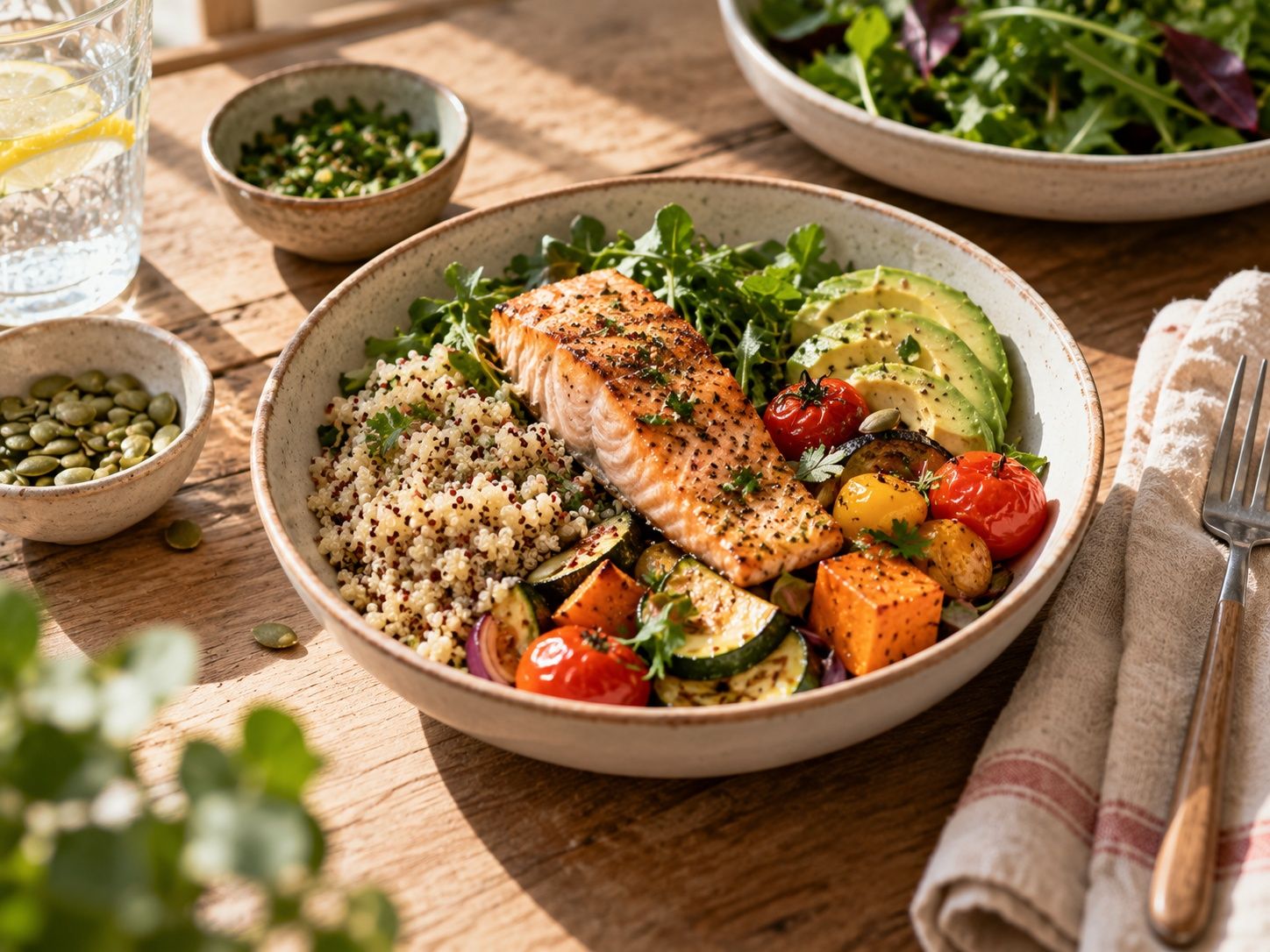
You don't need protein powder to hit these numbers, though it's a convenient option if you struggle to. A realistic day might include eggs or Greek yoghurt at breakfast, a source like chicken, fish, tofu or legumes at lunch and dinner, and a protein-containing snack — nuts, cottage cheese, edamame — if there's a long gap between meals. Combining plant proteins (beans, lentils, grains) across the day covers the full range of amino acids just as well as relying on animal sources alone.
The takeaway
If you haven't reassessed your protein intake since your 30s, it's worth doing the maths on what you're actually eating versus what the evidence now supports for this life stage — particularly if you're also trying to stay active, as resistance exercise and adequate protein work together, not separately.